Introduction
Opening a new food venue or managing a busy hotel food and beverage (F&B) department comes with endless logistical challenges. Among them, commercial tableware inventory planning is one of the most critical yet frequently miscalculated tasks. For new restaurant setups and hotel renovation projects, finding that “sweet spot” for your initial procurement can feel like guesswork.
Underestimating your initial order leads to a sudden shortage of plates during peak weekend rushes, forcing the kitchen to stall while waiting for the dishwasher. Conversely, over-purchasing ties up your hard-earned liquid capital and fills valuable storage rooms with dead stock. Successful dinnerware planning is not just about choosing the right plates and bowls—it is about ensuring smooth operations, efficient inventory management, and long-term cost control. This comprehensive guide will break down the exact formulas, operational variables, and industry benchmarks needed to build a resilient commercial dinnerware inventory strategy
Key Takeaways
- The Commercial Dinnerware Quantities for Restaurants and Hotels = Seating Capacity times × Table Turnover Rate × Backup Stock Factor.
- For most newly opened restaurants, the quantity of main tableware that needs to be purchased should be 2 to 3 times the number of seats.
- Seating capacity, service style, menu complexity, and dishwashing efficiency all influence dinnerware quantity requirements.
- Commercial-grade bone china and porcelain typically offer longer service life and lower replacement rates than lower-quality alternatives.
- Effective inventory management includes establishing par levels, monitoring breakage trends, and planning for seasonal demand fluctuations.
Why Accurate Dinnerware Planning Matters
Many hospitality businesses focus heavily on selecting dinnerware materials, shapes, and designs, yet overlook one of the most critical factors: quantity planning.
Whether you’re managing a luxury hotel, an all-day dining restaurant, a fine dining venue, or a banquet operation, having the right number of plates, bowls, cups, and serving pieces directly affects daily operations. Effective commercial dinnerware planning helps operators balance guest satisfaction, inventory costs, and service efficiency while reducing unnecessary procurement expenses.
Preventing Service Disruptions
One of the most common operational problems in restaurants and hotels is simply running out of essential dinnerware during busy service periods.
Imagine a fully booked restaurant during dinner service or a hotel banquet hosting hundreds of guests. If there are not enough dinner plates, soup bowls, dessert plates, or coffee cups available, service teams may be forced to delay orders, rush washing cycles, or use substitute pieces that create an inconsistent tabletop presentation.
These shortages can lead to:
- Slower table turnover
- Longer guest waiting times
- Increased pressure on kitchen and stewarding teams
- Inconsistent food presentation
- Reduced guest satisfaction
For high-volume hospitality operations, dinnerware availability is not merely a purchasing concern—it is a service continuity issue.
Proper quantity planning ensures that clean tableware remains available throughout peak breakfast, lunch, dinner, and banquet periods without interrupting operations.
Reducing Inventory Costs
While insufficient inventory can disrupt operations, excessive inventory can directly impact profitability.
In HORECA procurement, many purchasing managers assume that over-ordering dinnerware is the safest way to prevent shortages. However, over-purchasing often creates a different set of operational and financial challenges.
Commercial-grade dinnerware, including fine porcelain plates and premium bone china dinnerware, represents a significant capital investment. When inventory exceeds actual operational requirements, businesses may face several costly consequences:
- Increased Storage Space Requirements: Excess stock consumes valuable back-of-house and warehouse space, putting additional pressure on already limited storage capacity.
- Capital Tied Up in Inventory: Funds allocated to unnecessary dinnerware inventory remain locked in storage rather than being invested in business growth, marketing initiatives, equipment upgrades, or other operational priorities.
- More Complex Inventory Management: An excessive number of SKUs increases the complexity of stock control, inventory audits, asset tracking, and replenishment planning.
- Higher Risk of Damage During Storage: Even durable commercial dinnerware is vulnerable to hidden damage caused by repeated handling, transportation within storage facilities, and long-term stacking. Scratches, edge wear, and accidental breakage can accumulate over time.
- Obsolete or Unused Inventory: As menus evolve, dining concepts are refreshed, or brand identities are upgraded, certain shapes, collections, or design may no longer fit the operation. These surplus items quickly devolve into obsolete liabilities.
For hotels and restaurants focused on lean and precision-driven operations, the objective of commercial dinnerware planning is not to maximize inventory levels. Instead, it is to determine the optimal inventory level that supports uninterrupted service while minimizing unnecessary costs.

Supporting a Consistent Guest Experience
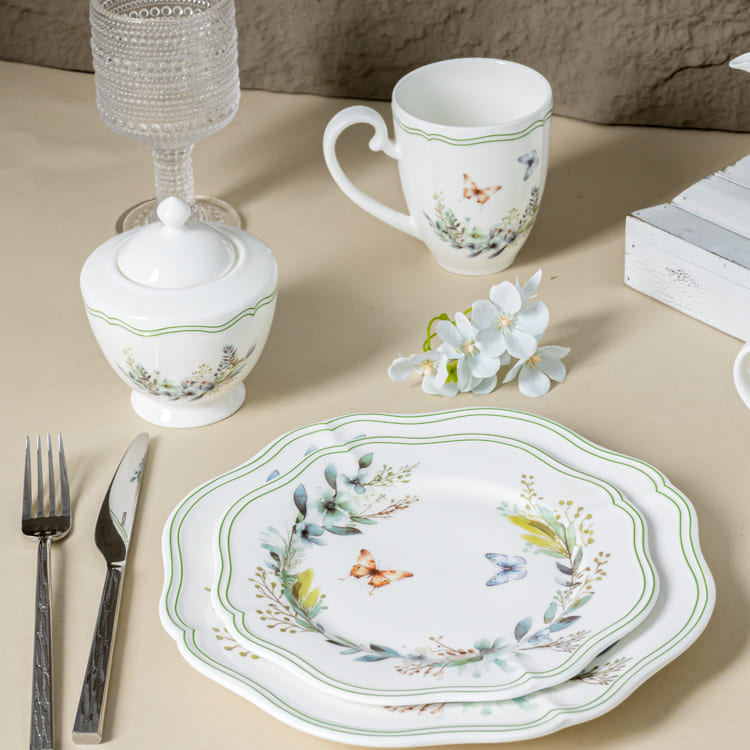
In luxury hotels, fine dining restaurants, resorts, and high-end banquet venues, a consistent tabletop presentation plays a critical role in shaping guest perceptions of quality and professionalism.
As an official dinnerware supplier to the Bocuse d’Or China region, PITO understands that leading chefs and hospitality brands demand absolute aesthetic consistency on the dining table.
However, when inventory shortages occur due to poor planning, operations teams are often forced to mix different dinnerware collections or introduce temporary replacement items. These inconsistencies can weaken the overall dining experience and dilute brand identity.
By establishing a well-structured commercial dinnerware inventory plan, hotels and restaurants can ensure that every service period, every table setting, and every guest experience reflects the same level of professionalism and brand consistency.
In the long run, accurate dinnerware planning does far more than improve operational efficiency and reduce procurement costs. It enables hospitality brands to consistently deliver exceptional dining experiences.
The Core Formula for Calculating Commercial Dinnerware Quantities
In commercial hospitality operations, under-ordering dinnerware disrupts service efficiency, while over-purchasing creates unnecessary warehousing pressure and ties up vital working capital. To strike the perfect balance, professional F&B consultants and hotel pre-opening procurement teams always plan their tableware inventory based on real-world operational demands.
A universally accepted foundational formula used across global hotel and restaurant projects is:
Quantity Required = Seating Capacity times × Table Turnover Rate × Backup Stock Factor
While actual procurement must also factor in variables like menu architecture, dishwashing zone efficiency, and banquet requirements, this formula serves as a reliable framework for procurement teams to quickly establish a precise initial ordering baseline.
Below is a detailed breakdown of the three critical variables that dictate your tableware inventory planning.
Seating Capacity
Seating capacity represents the absolute maximum number of guests a restaurant, banquet hall, or dining space can physically accommodate at any given time.
For example:
- A boutique fine-dining restaurant with 80 seats
- A hotel all-day dining outlet with 150 seats
- A grand banquet hall with a maximum capacity of 500 guests
Theoretically, a higher seat count requires a larger baseline of foundational tableware. However, a common mistake made by novice procurement managers is assuming that 100 seats equals 100 plates. In reality, the same dinner plate is washed, sanitized, and reused multiple times a day. Therefore, The next factor—table turnover rate—often has an even greater impact on overall inventory requirements.
Table Turnover Rate
The table turnover rate defines how many times a single seat is occupied by different guests throughout a specific operating period. Across the diverse ecosystem of hospitality, the operational tempo varies drastically, causing the circulation speed of commercial grade plates to differ significantly between venues.
For restaurants and hotels that are currently in operation, purchasing team can directly refer to the average table turnover rate of own restaurants. For new hotel openings and restaurant launches, the following industry benchmarks can serve as a useful planning reference:
| Venue Type | Average Turnover (Per Peak-Session) | Operational Dynamics & Tableware Impact |
| Fine Dining | 1.0 – 1.5 turns | Prolonged guest dining time; Higher demand for artisan, high-aesthetic specialty shapes. |
| Casual Dining | 2.0 – 3.0 turns | High-intensity service pace; rapid circulation requires maximum inventory volume and superior chip resistance. |
| Hotel All-Day Dining | 1.5 – 2.5 turns | Continuous 3-meal operation; Hotel dinnerware subject to constant back-to-back washing, drying, and rapid thermal cycles. |
| Buffet Restaurants | 2.5 – 4.0 turns | High traffic volume; guests change plates multiple times per visit, magnifying the pressure on back-of-house stock. |
| Banquet & Event Venues | Synchronized (No standard turnover) | Zero turnaround time during service; requires 100% of maximum seating capacity ready and plated simultaneously. |
Fine Dining (1.0 – 1.5 turns/peak-session): Guests often spend several hours enjoying chef-curated tasting menus and multi-course dining experiences. While these venues may require fewer quantities of each individual plate type, they generally demand a wider variety of specialty dinnerware and higher aesthetic standards.
Casual Dining (2.0 – 3.0 turns/peak-session): Casual dining concepts generally operate at a high service pace. Frequent guest turnover places greater pressure on dinnerware circulation, requiring higher inventory levels and durable commercial-grade plates with strong chip resistance.
Hotel All-Day Dining (1.5 – 2.5 turns/peak-session): Although turnover may not be as rapid as casual dining restaurants, these venues often serve breakfast, lunch, and dinner continuously. As a result, dinnerware moves through the dishwashing and replenishment cycle at a much higher frequency throughout the day.
Buffet Restaurants (2.5 – 4.0 turns/peak-session): This high-traffic model experiences massive diner volume, particularly during hotel breakfast hours. Unlike traditional restaurants, buffet guests often replace plates multiple times during a single meal. This creates intense pressure on both front-of-house and back-of-house dinnerware circulation, requiring significantly higher inventory levels and careful planning for peak service periods.
Banquet & Event Venues: Banquet operations function very differently from traditional restaurants. At weddings, conferences, gala dinners, and large corporate events, guests typically arrive, dine, and depart within a similar timeframe. Dinnerware cannot be continuously rotated through service as it can in a restaurant environment. As a result, banquet venues often need to prepare dinnerware quantities that closely match their maximum guest capacity. Large-scale events frequently require substantially higher inventory levels than other foodservice formats.
Backup Stock Factor
Even after defining seating capacity and turnover rates, a procurement order cannot be finalized without factoring in the unpredictable elements of daily commercial operations, such as:
- Accidental dinnerware breakage and chipping
- Back-of-house dishwashing logjams
- Unexpected increases in guest traffic
For this reason, professional dinnerware procurement plans always include a safety stock allowance.
For most restaurant and hotel dining environments, it is recommended to maintain an additional 20%–30% backup inventory. This reserve stock helps absorb normal breakage, operational fluctuations, and peak service demands without creating excessive inventory costs.
For banquet venues and event-focused operations, 30%–40% backup inventory is generally recommended. Banquet service involves large-scale manual handling, high-volume stacking, and zero turnaround time for dishwashing during service.
For most restaurant and hotel projects, commercial dinnerware planning is far more complex than simply matching the number of seats in the venue.
A successful procurement strategy must balance three critical factors: seating capacity, table turnover rate, and backup stock requirements.
By building a dinnerware inventory plan around real operational needs, hospitality businesses can maintain service quality, optimize inventory levels, and achieve greater control over procurement costs over the long term.
Beyond the Formula: Operational Factors That Affect Dinnerware Planning
While the quantity formula provides a solid starting point, commercial dinnerware planning should never rely on seat count and turnover rate alone. Service style, menu design, kitchen operations, and breakage patterns can significantly influence actual inventory requirements.
Service Style
Buffet Service: Buffet restaurants typically require the highest volume of basic dinnerware. Such as larger quantities of buffet plates, more soup bowls and dessert plates, and higher backup inventory for peak service periods. This is especially common in hotel breakfast buffets and buffet restaurant.
À La Carte Service: Guests order individual dishes rather than following a fixed dining sequence, resulting in moderate inventory requirements across multiple plate and bowl categories. Typical dinnerware categories include: dinner plates, salad plates, soup bowls, dessert plates. Compared with buffet operations, à la carte restaurants usually require fewer duplicate pieces but a wider assortment of tableware.
Banquet Service: Unlike restaurants where dinnerware can be continuously rotated throughout service, banquet venues often need to prepare all required tableware before guests arrive. A wedding banquet serving 500 guests may require hundreds of matching pieces to be available simultaneously. For banquet projects, inventory planning should always account for maximum event capacity rather than average daily demand.
Menu Complexity
The complexity of the menu directly affects the variety and quantity of dinnerware required. A simple dining concept with a limited menu may only require a few essential pieces, while a sophisticated dining program can significantly increase inventory requirements.
For example, a basic restaurant operation may only need:
- Dinner plates
- Bowls
- Mugs
In contrast, a hotel restaurant or fine dining venue may require:
- Charger plates
- Dinner plates
- Salad plates
- Dessert plates
- Soup bowls
- Bread plates
- Specialty serving pieces
This is particularly important for luxury hotels and chef-driven restaurants, where each dish is often paired with a specific plate shape or presentation style.
When planning commercial dinnerware inventory, purchasing teams should evaluate not only guest volume but also menu structure and presentation requirements.
Washing Capacity and Turnaround Time
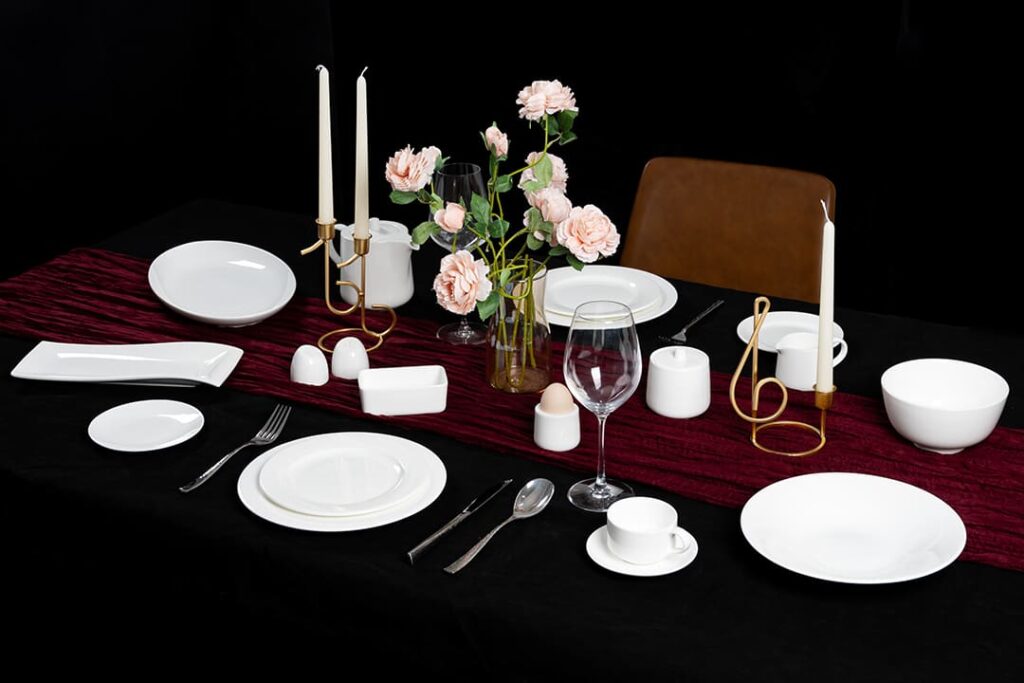
Dishwashing efficiency is one of the most overlooked factors in commercial dinnerware planning. Two restaurants with identical seating capacities may require completely different inventory levels depending on how quickly dinnerware can be cleaned and returned to service.
For example:
Restaurant A operates an automated dishwashing line capable of processing large volumes within minutes.
Restaurant B relies primarily on manual washing and limited kitchen space.
Even if both restaurants serve the same number of guests, Restaurant B will typically require a larger dinnerware inventory to compensate for slower turnaround times.
Several factors can affect washing capacity:
- Dishwashing equipment performance
- Labor availability
- Storage and drying space
- Peak-hour processing volume
Breakage and Replacement Rates
A proper procurement plan should always evaluate the relationship between dinnerware circulation and dishwashing efficiency.
In every hospitality operation, a certain percentage of plates, bowls, cups, and serving pieces will eventually be damaged, chipped, scratched, or broken. The hospitality industry experiences an average annual breakage rate of 15% to 25%.
While premium bone china and high-quality porcelain tableware offer excellent durability, replacement planning remains an essential part of long-term inventory management. Professional hospitality operators typically include annual replenishment budgets within their procurement strategy. This is to support operational continuity and brand consistency.
Partnering with a Chinese tableware manufacturer like PITO—which guarantees continuous mold availability and pattern consistency over a multi-year lifecycle—ensures you can seamlessly replenish your inventory year after year. This prevents the costly operational nightmare of being forced to scrap an entire dining room set simply because a single specialized plate style was abruptly discontinued by a vendor.
Inventory Management Best Practices
Calculating the correct purchase quantity is only the first step in successful commercial dinnerware planning. Without proper inventory management, even the most carefully planned procurement strategy can quickly result in shortages, unnecessary replacements, and increased operating costs.
The following best practices can help hospitality operators improve inventory control, reduce waste, and extend the lifecycle of their commercial dinnerware collections.
Establish Par Levels
One of the most effective inventory management tools used by professional hospitality operators is the establishment of Par Levels.
A par level is the minimum quantity of a specific dinnerware item that should always be available in inventory.
For example:
- Dinner Plates: Minimum 250 pcs
- Soup Bowls: Minimum 200 pcs
- Coffee Cups: Minimum 150 pcs
Once inventory falls below the predetermined threshold, the purchasing team can initiate replenishment before operational shortages occur.
Without clear par levels, many businesses only discover inventory problems after service has already been affected.
For multi-unit restaurant groups and hotel operations, par level management is often considered a fundamental component of effective inventory control.
Monitor Breakage Trends
Dinnerware breakage is an inevitable part of hospitality operations.
Hospitality operators should regularly track:
- Monthly breakage rates
- Frequently damaged items
- High-risk operational areas
- Replacement and replenishment costs
More importantly, breakage reports should be analyzed rather than simply recorded.
For example, if monthly inventory audits reveal that 8-inch salad plates consistently experience a 15% higher breakage rate than other dinnerware items, the issue may not be the product itself but the operational process behind it.
Over time, tracking breakage trends helps hospitality businesses optimize inventory planning, improve staff handling procedures, forecast replacement requirements more accurately, and reduce preventable costs across the operation.
Plan for Seasonal Demand
In reality, hotels, resorts, banquet venues, and restaurants rarely operate at a consistent volume throughout the year. Tourism cycles, holiday periods, wedding seasons, and corporate events can all create significant fluctuations in demand.
A restaurant may operate comfortably with its standard inventory during slower months, only to encounter shortages when guest traffic increases during peak seasons.
Many larger hotels and event venues adopt a layered inventory strategy. In addition to the dinnerware required for daily operations, they maintain a reserve inventory of high-volume banquet plates, bowls, and service pieces that can be activated during peak periods. During slower seasons, these reserve items remain safely stored to minimize storage congestion and handling-related damage. As demand increases, the reserve stock can be gradually introduced into active circulation to support higher guest volumes and intensive banquet schedules.
This approach not only improves operational flexibility but also helps extend the lifespan of the dinnerware collection by reducing unnecessary handling during off-peak periods.
Ultimately, successful inventory management is not simply about maintaining enough stock for today’s service. It is about anticipating tomorrow’s demand. By aligning dinnerware inventory with seasonal business cycles, hospitality operators can maintain consistent service standards, improve inventory utilization, and achieve greater control over procurement costs throughout the year.
While the principles outlined above provide a solid framework, every hospitality project has unique operational requirements. This is where professional planning support can help bridge the gap between theory and execution.
How PITO Helps Hotels and Restaurants Plan Commercial Dinnerware
Trusted Industry Experience: With over 20 years of manufacturing experience and as a supplier to the Bocuse d’Or culinary competition, PITO works closely with hospitality professionals worldwide to support both operational and design-driven dinnerware planning.
Dinnerware Assortment Planning: Instead of selecting items in isolation, we help clients align dinnerware assortments with their service style and menu structure. This ensures that every item used in service contributes to both operational efficiency and table presentation consistency.
Quantity Estimation Support: We assist hospitality teams in estimating realistic dinnerware requirements based on seating capacity, service flow, and operational assumptions. This is especially useful for new restaurant and hotel projects without historical data.
Hotel and Restaurant Project Consultation: For pre-opening or renovation projects, dinnerware planning is integrated into the broader operational setup, helping teams avoid over-purchasing or under-planning at early stages.
OEM & ODM Customization: For brands seeking differentiation, we support customized shapes, finishes, and branding elements that align with the overall concept of the property while maintaining commercial durability.
Conclusion
Successful commercial dinnerware procurement is not simply about purchasing enough plates, bowls, and cups. It is a long-term operational decision that balances service efficiency, inventory control, and guest experience.
By applying a structured approach to dinnerware planning—based on seating capacity, service style, operational turnover, and material selection—hotels and restaurants can significantly reduce unnecessary procurement costs while improving overall service reliability.
Whether you are opening a new restaurant, renovating a hotel dining outlet, or planning a large-scale banquet operation, a well-structured dinnerware planning strategy helps ensure operational stability and long-term success.
Confused about your initial dinnerware order? Contact the PITO expert team today with your seating capacity and menu concept, and PITO team will customize a comprehensive commercial dinnerware inventory plan and wholesale quote for you within 24 hours.
FAQ
What is the standard annual breakage rate for dinnerware in a hotel or restaurant?
On average, the hospitality industry sees an annual breakage and chipping rate of 15% to 25% for standard dining venues. However, this varies significantly by venue type. Banquet operations and high-volume hotel all-day dining outlets can experience breakage rates as high as 20% to 30% due to intense mechanical handling and high-stacking.
How far in advance should we place our initial dinnerware order for a pre-opening hospitality project?
For new restaurant setups or hotel renovations, we highly recommend initiating your procurement planning and placing orders at least 3 to 4 months (12 to 16 weeks) before your soft opening. This timeline comfortably accounts for customized design samples (OEM/ODM options), factory production cycles, rigorous quality checks, and international sea freight logistics.
What is a “Par Level” in restaurant inventory management, and why does it matter?
A “Par Level” is the minimum baseline quantity of a specific tableware SKU that must be physically clean and available in the kitchen at the start of a service shift. For example, if your dinner rush requires a constant pool of 200 dinner plates, your par level is set to 200. Regular weekly audits should be conducted; if daily breakage drops the stock below this established “par floor,” an immediate replenishment order is triggered to prevent service delays.
How long does a factory typically maintain pattern and mold continuity for customized replenishment orders?
Most retail-grade vendors typically discontinue lines or destroy customized molds within 1 to 2 years. Conversely, as a dedicated HORECA tableware manufacturer, PITO establishes permanent digital production blueprints and safely archives your proprietary molds for up to 10 years. This strict commitment to supply chain continuity guarantees that commercial operators can execute top-up orders years down the road with absolute precision—achieving uniformity in dimensional size, color, shape, and glaze.
How many plates does a 100-seat restaurant need?
For new restaurant projects, using 2-3 sets of core dinnerware per seat provides a practical starting point.
Dinner Plates: approximately 300 pieces
Soup Bowls: approximately 250–300 pieces
Salad Plates: approximately 200–250 pieces
Dessert Plates: approximately 150–200 pieces
Coffee Cups / Mugs: approximately 150–200 pieces