In hospitality, choosing the right dinnerware—especially when comparing bone china vs porcelain—directly impacts presentation, durability, and long-term operational costs.
Among all ceramic dinnerware materials, bone china and porcelain are the most widely used in commercial hospitality. Although bone china is technically a type of porcelain, their performance, durability, and commercial value differ significantly in real-world use.
In this guide, PITO provide a detailed comparison of bone china vs porcelain to help you choose the best material for your hospitality business.
Key Takeaways: Bone China vs Porcelain
If you’re deciding quickly:
Choose Bone China for fine dining, luxury hotels, and premium brand positioning.
Choose Porcelain for high-volume operations, banquets, and cost-sensitive projects.
The best solution for most hospitality businesses is actually a combination of both materials, used in different scenarios.
What’s the Difference Between Bone China and Porcelain?
Here is a quick comparison of bone china vs porcelain:
| Feature | Bone China | Porcelain |
| Composition | Includes 40–50% bone ash | Mineral-based |
| Appearance | Warm ivory tone, soft and refined | Cool or pure white, clean look |
| Translucency | High | Low–medium |
| Strength | High, lightweight yet strong | High, thick and solid |
| Weight | Lightweight | Heavier |
| Cost | Higher upfront | More cost-efficient |
| Heat Resistance | Good | Good |
| Application | Fine dining, luxury hospitality | General and commercial use |
| Dishwasher Safety | Safe (Except for the metal decorations) | Safe (Except for the metal decorations) |
Overall, bone china offers a premium experience with long-term durability, while porcelain provides a practical and cost-efficient solution for large-scale operations.
Appearance and Translucency
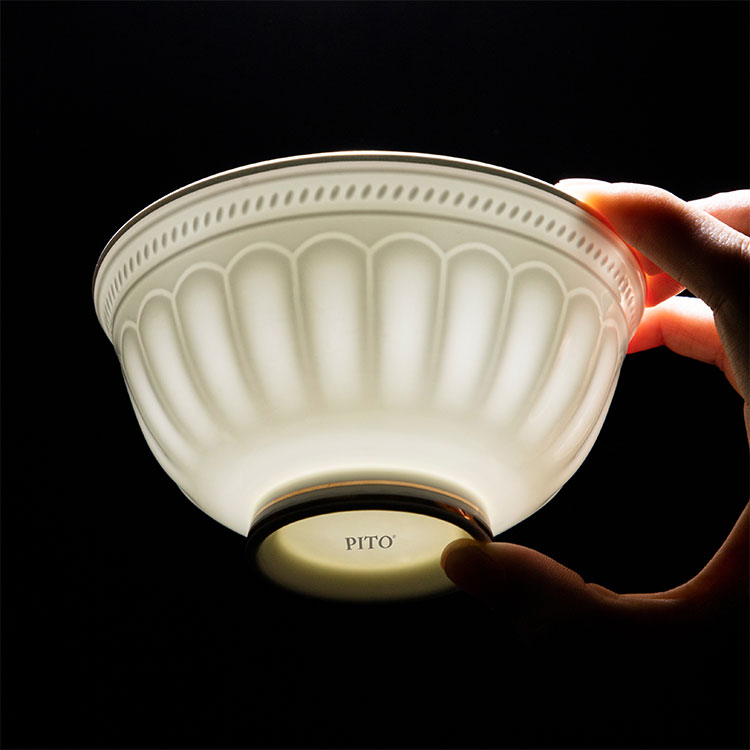
One of the most distinctive features of bone china is its semi-translucency.
The calcium phosphate in the bone ash alters the ceramic’s microstructure, allowing light to partially pass through the body.Under lighting, this creates a soft, elegant glow that enhances food presentation. Bone china typically features a warm ivory tone, giving it a refined and premium visual appearance.
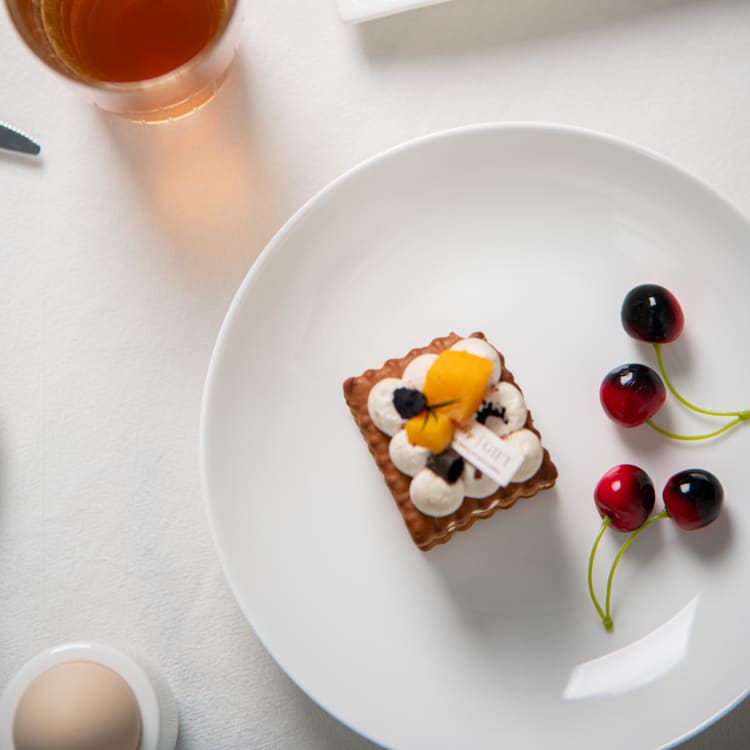
Porcelain, by contrast, usually appears in cool or pure white tones. While brighter and cleaner in appearance, it has lower translucency than bone china.
| Color Tone | Translucency | Visual Style | |
| Bone China | Warm Ivory/Creamy White | Jade-like Translucency | Refined, Elegant, Luxury |
| Porcelain | Cool/Crisp Pure White | Lower translucency | Pure, Classic, Formal |
Bone China vs Porcelain: Durability and Strength Comparison
Strength
- Bone China: Contains over 40% natural bone ash, forming a dense crystal structure during firing. This gives it high impact resistance, even with thinner walls.
- Porcelain: Made primarily from kaolin and quartz, porcelain is very hard but relatively more brittle, often requiring a thicker body for durability.
Durability
- Bone China: Typically fired twice, resulting in a dense, smooth glaze that resists scratches from metal cutlery. This enhances durability and extends the service life of the tableware.
- Porcelain: High-quality commercial porcelain also offers good wear resistance, but may show minor surface wear after long-term high-frequency use.
Professional Recommendation:
For high-end projects that prioritize exceptional dining experiences and brand positioning, bone china is the preferred choice due to its light, thin, and semi-translucent aesthetic combined with superior physical resilience. For high-frequency, high-volume commercial purchases, porcelain offers an excellent cost-to-performance ratio, providing durability at a more economical investment.
Bone China vs Porcelain: Weight Differences
When selecting dinnerware, weight affects not only hand feel, but also service efficiency, staff workload, and overall dining experience. Bone china and porcelain differ significantly in weight and thickness, making them suitable for different applications.
Bone China: Thanks to its bone ash content, bone china can be made 20–30% thinner and lighter than porcelain while maintaining strength. This lightweight characteristic makes it ideal for fine dining service, where staff carry multiple plates and precision plating is required.
Porcelain: To achieve durability in high-frequency environments, porcelain typically uses a thicker body, resulting in a heavier and more substantial feel. This makes it more stable and practical for large-scale service.
| Dimension | Bone China | Porcelain (Fine/Hotel-Grade) |
| Weight ratio (same size) | Lighter (~25–35% less) | Heavier |
| Hand feel | Light, refined, semi-translucent | Solid, substantial, dense |
| Typical applications | High-end banquet halls, executive lounges, custom premium projects | Full-service restaurants, large conference dining, cafés |
In summary, bone china is lightweight and refined, while porcelain is heavier but more robust—each serving different operational needs.
Bone China vs Porcelain: Manufacturing and Cost Differences
The differences between bone china and porcelain are not only due to raw materials, but also their manufacturing processes and firing temperatures—both of which directly impact durability, performance, and cost.
Bone China: The exceptional performance of bone china comes from its complex manufacturing process and strict production control. Due to the low plasticity of bone ash, shaping and firing require precise control, resulting in lower production yields and higher costs. While premium raw materials and rigorous production standards increase overall costs, they result in a material that is uniquely lightweight, translucent, and remarkably resilient—perfectly suited for luxury hospitality.
As an experienced hospitality tableware manufacturer, PITO produces bone china using a twice high-temperature firing process, ensuring excellent strength, translucency, and long-term durability.
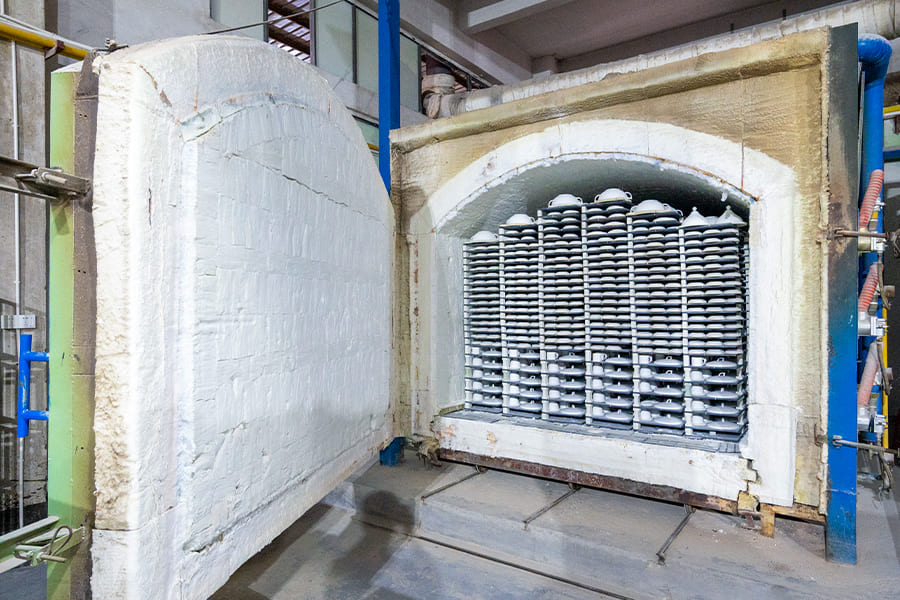
Porcelain: With a more mature and stable production process, porcelain offers consistent quality and cost efficiency—making it ideal for large-scale procurement. Without the use of expensive bone ash, porcelain significantly reduces raw material costs, providing a strong ROI for high-turnover dining environments.
PITO porcelain is fired at high temperatures to achieve high hardness, thermal stability, and long service life—ideal for intensive commercial use.
Bone China vs Porcelain: Thermal Shock Resistance
In commercial kitchens, dinnerware is frequently exposed to rapid temperature changes—from dishwashers to hot plating.
- Bone China: Offers superior thermal shock resistance due to its material toughness, reducing the risk of cracking under sudden temperature changes.
- Porcelain: Performs well under normal conditions but may have a higher risk of cracking under extreme temperature fluctuations.
Bone China is better suited for environments with frequent temperature changes, offering longer lifespan and lower breakage rates. And porcelain is reliable for daily use, but performs best with controlled preheating. For high-end dining environments with frequent reheating or pre-heated plates, bone china is generally the safer choice.
Dishwasher Safety: Bone China vs Porcelain
Both Bone China and Porcelain are generally dishwasher-safe, but durability depends on glaze quality, firing temperature, and manufacturing process. The high-fired ceramics typically feature denser glaze surfaces, stronger chemical resistance, longer service life.
Glaze Chemical Resistance
The glaze bonds tightly with the calcium-rich body, forming a dense and smooth protective layer. Even under strong alkaline conditions, bone china maintains its signature soft luster without dulling or clouding.
High-quality porcelain also offers good resistance, but over time, frequent washing may lead to micro-abrasion, reducing gloss or causing slight staining.
Chipping Resistance
Thanks to its material toughness, bone china is less prone to edge chipping during washing, stacking, or minor impacts—resulting in lower breakage rates.
While hard, porcelain is more brittle. Improper loading or dense stacking can increase the risk of edge damage.
Dishwasher Durability Comparison
| Evaluation Factor | Bone China | Commercial Porcelain |
| Chemical Resistance | Excellent | Good, may wear over time |
| Thermal Shock Resistance | Excellent | Good |
| Chipping Resistance | Very high | Moderate |
| Long-term Appearance | Maintains like-new finish after 1,000+ cycles | May show wear and micro-scratches |
Professional Tips for Extending Lifespan:
- Use low-alkaline or neutral detergents
- Avoid overcrowding during loading
- Maintain washing temperature at 60–70°C
What Is Bone China?
Bone china is a premium type of porcelain that contains at least 40% bone ash. Compared with standard porcelain, bone china is lighter, more translucent, and smoother—making it a preferred choice for premium tableware.
Bone china is typically made from bone ash, kaolin, feldspar, and quartz. The addition of bone ash is the key factor that distinguishes bone china from standard porcelain. A product is generally classified as bone china when it contains at least 40% bone ash. High-quality bone china often contains 45% or more bone ash.
Bone ash is usually produced from calcined cattle bone powder that has been fired at high temperatures, creating a material rich in calcium phosphate. This component gives bone china its distinctive ivory-white color and excellent translucency. It also enhances the toughness of the body, allowing bone china products to be manufactured with thinner and lighter bodies.
As a result, bone china is widely used in fine dining, luxury hotels, and high-end tableware due to its elegant appearance and strong durability.
What Is Porcelain?
Porcelain is a high-density ceramic material made primarily from natural minerals such as kaolin, quartz, and feldspar. It is fired at high temperatures ranging from approximately 1200°C to 1400°C (2,200 and 2,600 °F). Due to its high firing temperature and dense structure, porcelain typically offers excellent strength, good heat resistance, and an elegant, refined appearance. Therefore, it is widely used in everyday tableware as well as high-quality ceramic products.
Porcelain is known for several key characteristics:
- High whiteness: The porcelain dinnerware body is clean, bright, and naturally white, giving porcelain a refined and elegant look.
- High hardness: High-temperature firing creates a dense ceramic structure, resulting in strong hardness and good wear resistance. This durability makes porcelain well suited for the demanding conditions of commercial tableware use.
- Smooth surface: The glazed surface becomes smooth and non-porous after firing, making porcelain dinnerware resistant to staining and easy to clean.
In the tableware industry, porcelain is valued for its durability, consistency, and mature manufacturing process, which is why it is widely used in restaurants, banquet operations, and high-volume dining environments.
Which Is Better for Commercial Hospitality?
In commercial hospitality, there is no absolute answer to “which is better.”
The choice between bone china and porcelain ultimately depends on brand positioning, operational model, and cost structure.
For hotel and restaurant procurement, the more important question is: Which material best fits your specific business scenario?
Premium Dining & Brand Experience: Bone China
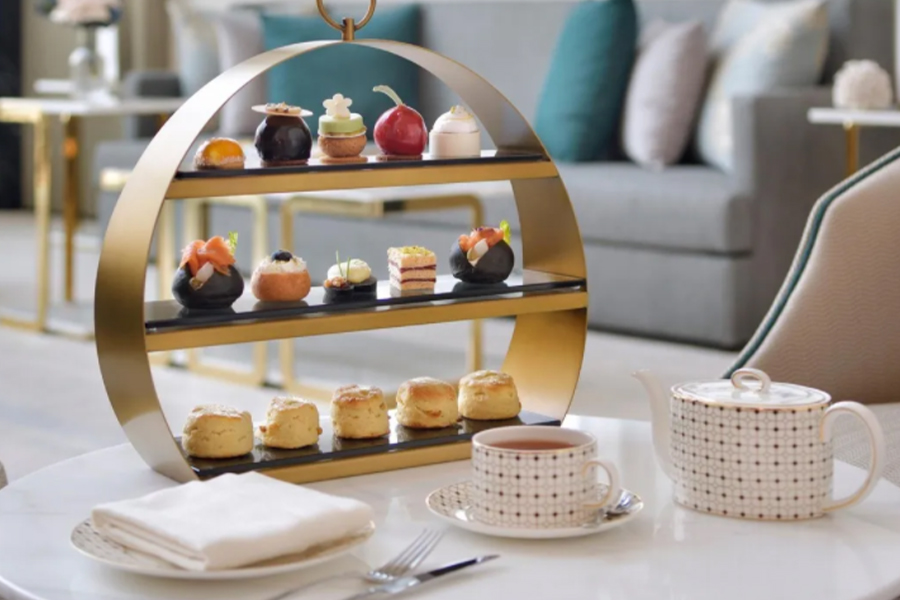
For Michelin-starred restaurants, five-star hotels, executive lounges, and bespoke luxury events, Bone China offers superior value.
- Brand Image & Visual Premium:
Bone China’s signature warm white tone and semi-translucency create a refined, jade-like glow under lighting, significantly enhancing food presentation and elevating the dining atmosphere. - Long-Term Asset Value:
Although the initial investment is higher, its excellent toughness reduces chipping rates, extends service life, and lowers long-term replacement costs.
High-Turnover & Scalable Operations: Porcelain
For all-day dining restaurants, large banquet halls, and high-traffic cafés, Porcelain is a more practical and cost-efficient choice.
- Superior Heat Retention: With a thicker body and higher thermal mass, porcelain retains heat longer after preheating—critical for maintaining food quality in large-scale service.
- Stable & Durable for Intensive Use: Its thicker structure ensures reliability under frequent washing, stacking, and rapid turnover conditions.
- Excellent Cost Efficiency (ROI): Lower initial CAPEX makes it ideal for bulk procurement, especially in high-loss environments such as buffets or casual dining.
Professional Recommendation: The Hybrid Strategy
In real-world hospitality operations, a single material rarely meets all needs.
A more effective approach is strategic combination based on usage scenarios:
- Guest rooms & executive lounges: Use Bone China to enhance exclusivity and premium experience.
- Banquet halls & all-day dining: Use Porcelain to support high turnover and intensive operations.
- Custom projects: Use high-whiteness porcelain (e.g., Royal White) for logo customization and a clean, professional aesthetic.
Procurement Considerations for Hospitality
Selecting the right dinnerware is more than just a purchase—it’s a strategic decision that impacts long-term costs, operational efficiency, and guest experience.
Key Considerations:
- Bone China: Higher upfront investment, but lower breakage rates and longer service life deliver better long-term value. Ideal for fine dining, luxury hotels, and executive lounges.
- Porcelain: Lower initial cost, ideal for large-scale deployment, high-frequency operations, and banquet halls. Provides practical durability while optimizing ROI.
Practical Tips:
- Test samples in real kitchen conditions, including dishwashing cycles, cutlery abrasion, and temperature fluctuations.
- Consider hybrid strategies, combining bone china and porcelain in different service areas to balance aesthetics, durability, and cost efficiency.
Why Choose PITO:
As a global hospitality tableware manufacturer, PITO provides tailored solutions for both bone china and porcelain:
- High-quality bone china with superior translucency, lightweight design, and long-term durability
- Commercial-grade porcelain designed for intensive use and large-scale operations
- Custom design and logo options for hotels and restaurants
- Reliable supply chain to support bulk procurement and consistent quality
With extensive global experience, PITO helps hospitality businesses balance aesthetics, performance, and cost efficiency, ensuring a premium dining experience while protecting long-term investment.
FAQs
Is bone china better than porcelain??
It depends on your needs. Bone china is ideal for fine dining and luxury hotels, while porcelain is better for high-volume operations like banquets and all-day dining.
What is the difference between bone china and porcelain?
Bone china contains 40%+ bone ash, making it lighter, more translucent, and more refined. Porcelain is denser, harder, and more cost-efficient for everyday commercial use.
Is porcelain stronger than ceramic?
Yes. Porcelain is fired at higher temperatures, making it denser, harder, and more durable than standard ceramics like earthenware.
What types of porcelain does PITO offer?
PITO offers Royal White Porcelain, Fine Porcelain, and Color Glazed Porcelain—designed for different hospitality needs, from high-end presentation to high-turnover use.
Is bone china suitable for high-frequency hospitality use?
Yes. It performs well under frequent use, including dishwashing and temperature changes, while remaining lightweight and durable.
Which material reduces long-term replacement costs?
Bone china often has a higher upfront cost but lower breakage rates, making it more cost-effective over time.
Is bone china microwave safe?
Yes, high-quality Bone China is generally microwave safe, provided it does not contain metallic decorations (such as gold or silver rims).
Is porcelain stronger than bone china?
Porcelain is harder, but bone china is tougher and less likely to chip. In practice, bone china often performs better in commercial environments.
Why do luxury hotels prefer bone china?
Because it offers a more refined appearance, lighter handling, and long-term durability—enhancing both guest experience and brand perception.