Many hotel procurement managers, executive chefs, and food & beverage (F&B) operation leaders face the same frustrating issue: newly purchased dinnerware begins to exhibit edge chipping, notches, or outright breakage within just a few months of service.
This problem is especially common in high-frequency hospitality environments such as hotel breakfast buffets, all-day dining restaurants, salones de banquetes, and large-scale catering operations. While some operators consider chipping to be “normal wear and tear,” excessive breakage across large batches is not normal.
For high-end hotels and restaurants, a chipped plate does more than affect food presentation. It damages brand image, reduces perceived service quality. And increasing hidden operational costs due to frequent replacements, replenishment orders, and logistics inefficiencies.
This article explains why plates chip and how hospitality buyers can select more durable commercial dinnerware for long-term operational efficiency.
Conclusiones clave
- Plate chipping is a common issue in hotel and restaurant operations, especially in high-frequency environments such as buffets and banquet service.
- The main causes of chipping include low vitrification, poor thermal shock resistance, dishwasher vibration, and weak rim design.
- Chipped dinnerware increases not only replacement costs but also logistics expenses and operational workload. It also negatively impacts food presentation and overall brand perception in high-end hospitality environments.
- Durable commercial dinnerware should be evaluated based on vitrification level, rim structure, calidad del esmalte, and thermal shock resistance—not just price.
- Over a 3–5 year lifecycle, high-quality commercial porcelain typically delivers lower total cost of ownership (TCO).
Why Do Your Plates Chip?
Insufficient Vitrification
One of the most common causes of chipping is insufficient vitrification.
Some low-quality ceramics are fired at lower temperatures, resulting in a porous internal structure. These microscopic pores absorb moisture during daily washing and use.
In hotel and restaurant environments, dinnerware is exposed to repeated washing cycles and high-temperature sanitation every day. As moisture penetrates the porous structure over time, the material gradually weakens. Since the rim is the most impact-prone area, edge chipping typically occurs first.
In contrast, fully vitrified commercial porcelain fired at high temperatures has a denser structure and lower water absorption, resulting in significantly better chip resistance.
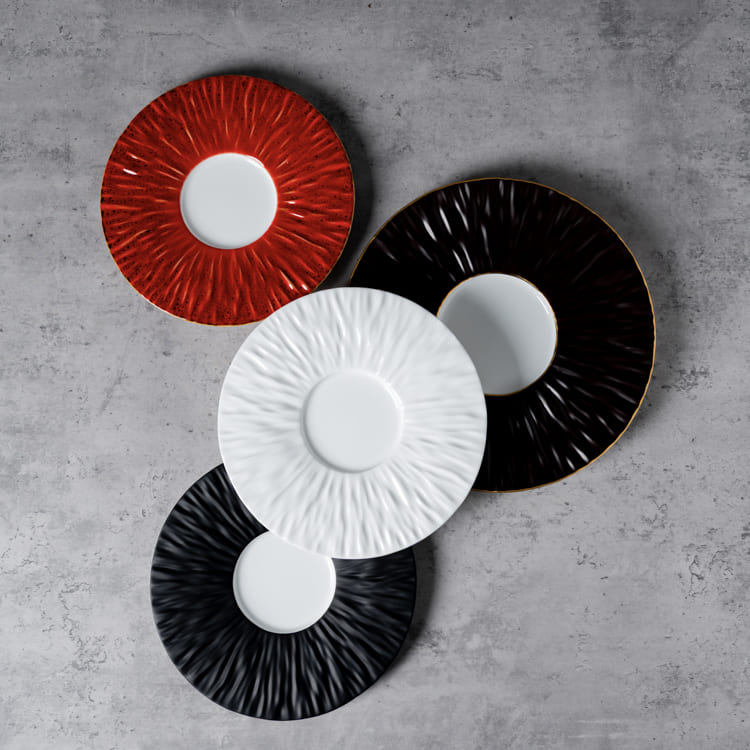
Por ejemplo, ARRIBA tableware is fired at a high temperature of 1320°C, achieving full vitrification. It also features extremely low water absorption, at ≤0.2%. This level of density helps reduce moisture penetration during repeated dishwasher cycles, improving structural stability over long-term use of tableware.
Poor Thermal Shock Resistance and Micro-Crack Accumulation
Hotel dinnerware experiences constant temperature fluctuations, como:
· Holding scalding hot entrees
· Entering high-temperature commercial dishwashers
This continuous temperature change is known as thermal shock.
If the material lacks sufficient thermal shock resistance, micro-cracks begin to form along the ceramic body—especially around the rim. These cracks are often invisible at first but gradually expand over time, eventually leading to chipping or breakage.
Many hotels notice that breakage increases significantly after a few months of use, which is often the result of accumulated thermal stress damage.
Dishwasher Vibration and High-Frequency Impact
In daily hospitality operations, commercial dishwashers are the primary cleaning equipment for dinnerware. Sin embargo, many operators overlook the fact that internal vibration and mechanical movement inside dishwashers also contribute to chipping.
Under high-pressure water jets, plates are not completely stationary. Slight movement, shifting, and even collisions between stacked items can occur inside the machine. Improper loading or mixing different plate sizes increases the likelihood of repeated impact during the wash cycle.
Although each individual impact may be minor, repeated exposure over hundreds of cycles gradually weakens the structural integrity of the rim, eventually resulting in chipping or edge loss.
For lower-impact-resistant dinnerware, this is often one of the earliest failure mechanisms.
Improper Edge Design as a Risk Area for Chipping
The edge is the most vulnerable area of any plate.
In banquet service, operaciones de buffet, and busy kitchen workflows, plates are constantly stacked, transported, and washed. Frequent contact concentrates stress on the edge, increasing the risk of edge damage.
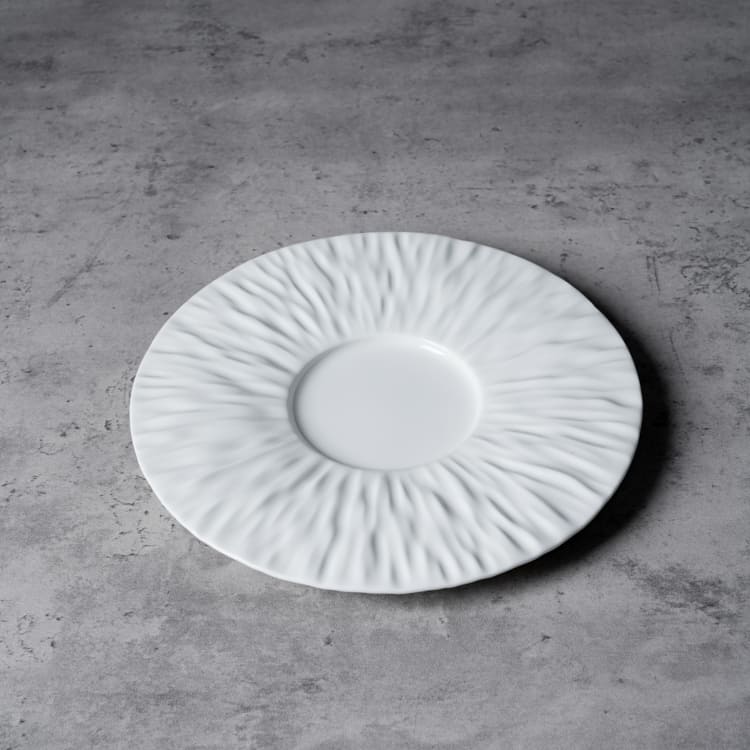
Many aesthetically designed ceramic plates prioritize thinness and elegance. While visually appealing, thin and sharp edges are not suitable for high-frequency commercial use.
In contrast, reinforced edge designs distribute impact forces more effectively, significantly reducing the risk of chipping. Professional hotel tableware manufacturers, como PITO, will specially design reinforced edge plates for use in commercial kitchens.
Chipped Plates are Far More Than a Simple Replacement Issue
Many procurement teams assume that chipped plates are simply a replenishment issue: “We can just reorder a few new plates.”
Sin embargo, the real cost of replacing chipped plates goes far beyond plate price.
Direct Operational Costs
The plate is frequently chipped leading to continuous replacement needs, which also increase:
- Inventory management costs
- Procurement administration costs
- Logistics and shipping expenses
Small replenishment orders are often far less cost-efficient than bulk purchasing.
Con el tiempo, dinnerware originally expected to last 3–5 years may require major replacement within just one year.
Impact on Brand Perception
In high-end hospitality, details define the guest experience. A perfectly plated dish served on a chipped plate immediately reduces perceived quality. Even if the food itself is excellent, guests may still question the restaurant’s professionalism and overall service standards.
For luxury hotels and fine dining restaurants, this represents an invisible but significant brand loss.
The Long-Term Value Fallacy: Cheap vs. High-Durability
Cheap dinnerware may appear budget-friendly initially, but long-term operational costs often tell a different story. When a low-cost plate requires constant replacement, its cumulative operational cost quickly eclipses that of high-quality commercial porcelain:
| Category | Cheap Dinnerware | High-Quality Commercial Porcelain |
| Initial Cost | Lower initial purchase cost | Slightly higher initial investment |
| Breakage Rate | Higher annual breakage and replacement rate | Lower breakage rate in commercial use |
| Service Life | Shorter service life | Longer service life |
| Logistics Cost | Higher due to frequent reordering | Lower due to stable supply cycles |
| Replenishment Frequency | Frequent replenishment cycles | Reduced replenishment frequency |
Over a 3–5 year lifecycle, durable dinnerware usually delivers a lower Total Cost of Ownership (TCO).
Por lo tanto, procurement decisions should not focus only on unit price, but on long-term operational cost efficiency.
How to Select Durable Commercial Dinnerware?
Verify Vitrification and Water Absorption
High-quality commercial porcelain is typically produced using high-temperature firing processes, resulting in a dense and fully vitrified structure.
Key factors to evaluate include:
- Temperatura de cocción
- Tasa de absorción de agua
- Degree of vitrification
Generalmente, lower water absorption indicates higher density and better durability.
Prioritize Reinforced Edge Designs
Reinforced edge plates are widely used in commercial dinnerware design.
Compared to thin-edge designs, reinforced edge help distribute impact forces more effectively during stacking, transport, y uso diario.
This significantly reduces the risk of edge chipping in hotel and restaurant environments.
Evaluate Glaze Hardness
Durability is not only determined by the porcelain plate body.
A high-quality glaze should be fully fused with the porcelain body, forming a durable protective layer.
Such glaze systems help resist:
- Knife and fork scratches
- Surface abrasion
- Staining
- Long-term visual wear
Focus on Thermal Shock Resistance
For hospitality operations, thermal shock resistance is a critical performance indicator.
Commercial-grade dinnerware must withstand rapid temperature changes without developing cracks or structural failure.
This is particularly important for banquet service, operaciones de buffet, and high-frequency usage environments.
Require Supplier Testing Data
Professional dinnerware suppliers should be able to provide verified technical data, incluido:
- Water absorption test reports
- Thermal shock resistance testing
- Dishwasher durability testing
- Material performance specifications
Compared to marketing claims, objective testing data provides far more reliable evaluation criteria for procurement teams.
How to Reduce Plate Chipping in Hotel Kitchens
In addition to selecting high-quality dinnerware, hotels can significantly reduce chipped edge rates through standardized operational procedures.
Optimize Storage and Stacking Practices
Stacking methods directly affect pressure distribution across plates.
Recommended practices include:
- Avoid excessive stacking height
- Separate storage by size and type
- Use anti-slip or cushioning layers
- Regularly inspect long-term storage pressure points
Proper stacking management helps reduce hidden structural stress.
Standardize Dishwasher Operating Procedures
Commercial dishwashing environments are a major source of thermal stress.
Recommended controls include:
- Avoid placing cold plates directly into high-temperature wash cycles
- Maintain stable wash and cooling temperature cycles
- Avoid mixing items with different temperature conditions
- Regularly inspect dishwasher temperature control systems
Reducing temperature fluctuations helps minimize micro-crack formation.
Monitor Dinnerware Usage and Damage Regularly
Most dinnerware failures are not sudden—they result from gradual damage accumulation.
Hotels should implement routine inspection systems such as:
- Monthly rim damage checks
- Immediate removal of lightly damaged items from front-of-house use
- Dedicated backup inventory for high-risk items
This helps prevent minor issues from escalating into large-scale losses.
Conclusión
Plate chipping is not an unavoidable problem in hospitality operations.
By evaluating vitrification level, rim design, glaze performance, and thermal shock resistance, procurement teams can more accurately identify dinnerware suitable for commercial use.
Instead of focusing solely on purchase price, it is more important to consider how much cost a product can save over its full lifecycle in terms of replacement, logistics, y eficiencia operativa.
PITO focuses on long-term commercial reliability rather than short-term visual appeal. Its product development is aligned with the operational needs of hotels, restaurantes, and large-scale catering groups.
If you are currently evaluating a new hotel dinnerware project, you are welcome to contact the PITO team to request product testing data, durability reports, or sample evaluation packages for real-world testing.
Preguntas frecuentes
Do ceramic plates chip easily?
Sí. Ceramic plates are generally more prone to chipping compared to high-temperature porcelain dinnerware.
This is because ceramic plates are typically fired at medium to low temperatures, which results in a less dense body structure. Como resultado, they tend to have higher porosity and lower resistance to impact and edge chipping, especially in high-frequency commercial use environments such as hotels and restaurants.
Should you replace chipped plates?
In the hotel and restaurant industry, it is strongly recommended to remove chipped dinnerware from service immediately once damage is detected.
Exposed porous ceramic surfaces may increase hygiene risks, as they can potentially harbor bacteria. Además, small fragments of damaged glaze may detach and enter food, posing a food safety concern and increasing the risk of customer complaints.
Chipped plates also negatively affect food presentation and overall brand perception, particularly in fine dining and luxury hospitality environments.
Do dishwashers cause plates to chip?
Commercial dishwashers themselves do not directly cause chipping. Sin embargo, improper loading and rapid temperature fluctuations inside the washing process can significantly increase the risk.
High-pressure water jets may cause loosely stacked plates to shift and collide with each other, leading to edge damage. Además, dinnerware with poor thermal shock resistance is more likely to develop micro-cracks or chipping during repeated dishwasher cycles.
What is the best material for hotel dinnerware?
In the hospitality industry, the most commonly used materials include porcelain, porcelana blanca y translúcida, and ceramic.
The “best” material depends largely on the positioning and operational requirements of the restaurant or hotel.
For casual dining, buffets, and high-volume restaurant operations, porcelain is the most widely used option due to its balanced durability, calidad, and cost efficiency compared to standard ceramic.
For fine dining and luxury hospitality environments, bone china is often the preferred choice, offering a more refined appearance, lighter weight, and a premium dining experience that enhances table presentation.